Learn Mattress Construction
Inside the Vispring Elite: A Guide to Natural Mattress Construction
A mattress is a quiet piece of engineering: a stack of materials asked to support a human body, shed heat, soften pressure, and keep its shape night after night. The Vispring Elite offers a useful lens through which to consider how natural fillings and layered construction can shape that experience—and what to ask before deciding whether a particular mattress belongs in your bedroom.
Published November 15, 2026
A mattress is more than its materials list
Mattress descriptions often read like inventories: fibers, springs, ticking, quilting, layers. The list can be informative, but it rarely tells the whole story. Two beds may share some of the same materials and still feel strikingly different, because comfort is produced by relationships: how one layer yields into another, how the support system responds to movement, and how the finished surface meets a sleeper’s particular shape and habits.
That is why the Vispring Elite is worth considering as a construction question, not merely a name. The central subject is the interaction between a mattress’s filling materials and its underlying support. Natural fibers may contribute softness, resilience, moisture management, or a distinctive surface feel. The mattress’s internal architecture determines how those qualities are distributed—and whether they suit the person lying there.
It is also useful to keep a distinction in view. “Natural” describes the origin or type of a material; it does not, on its own, establish how a mattress will feel, how long it will last, whether it is right for a particular sleeper, or what environmental impact its manufacture may have. Those questions require closer attention to specifications, certifications, care guidance, and personal experience.
Reading the layers
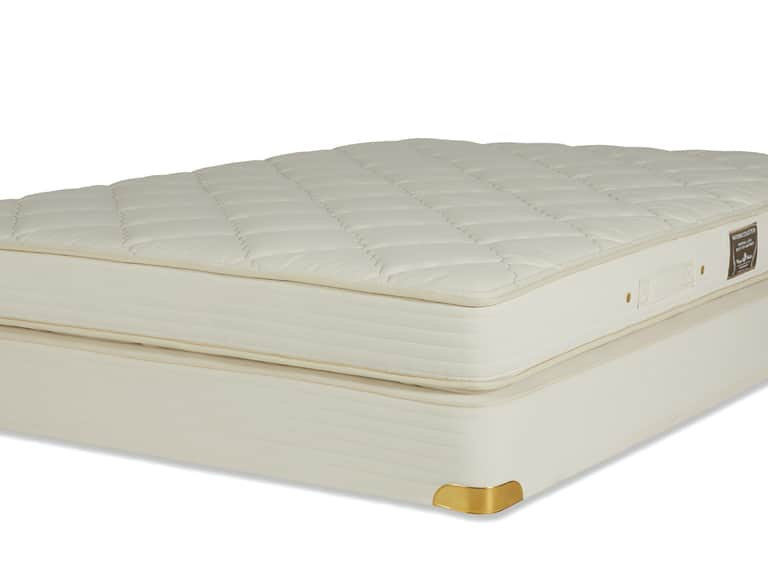
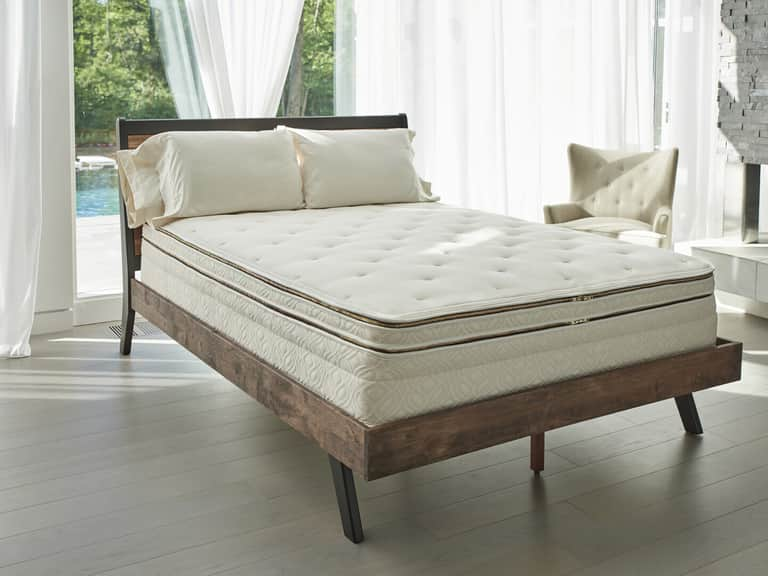
A mattress can be understood as a series of jobs assigned to different parts. The uppermost layers shape first contact: the initial softness or firmness, the degree of cushioning, and the way pressure is spread. Deeper comfort layers influence how far the body settles and how readily the surface responds when a sleeper changes position. Beneath them, a support core provides the more substantial resistance that helps keep the body from sinking unevenly.
These jobs overlap. A quilted surface may soften the transition between the sleeper and the structure below, while layers of fiber or other filling can change the surface’s loft and warmth. The support system, in turn, affects whether that softness feels gently accommodating or insufficiently stable. The construction is not a row of independent ingredients so much as a small ecosystem in which one component alters the character of the next.
When looking into the Vispring Elite, the sensible first step is to consult current, model-specific documentation for its exact composition, layer order, available comfort options, and dimensions. Mattress specifications can vary by market, size, or production period. A product name alone is not a complete technical description, and assumptions based on another model in the same range may lead to a mistaken picture of what is inside.
Once those details are confirmed, read them in sequence. Ask what sits nearest the body, what forms the central comfort layers, and what supplies the primary support. Note whether the stated materials are listed by layer or simply grouped together, and whether the manufacturer describes quantities, weights, or proportions. These details help turn a broad claim about natural construction into a more useful account of the mattress’s actual design.
What natural fillings can contribute
Natural fillings are not one material with one predictable behavior. Wool, cotton, and other fibers differ in loft, resilience, texture, and moisture handling. Their effect depends on how they are prepared, layered, quilted, and combined with the rest of a mattress. A reader trying to understand the Vispring Elite should therefore look beyond the reassuring generality of “natural materials” and identify the specific fillings named in the current construction details.
Fiber layers can influence the surface’s feel and its response to warmth and humidity. Their ability to absorb or release moisture is one reason they appear in bedding and mattress discussions about sleep climate. But this is not a promise that a mattress will keep every sleeper cool. Room temperature, bedding, sleepwear, a person’s own physiology, and the bed’s other materials all play a part. “Breathable” is a useful clue, not a guarantee of a particular night’s temperature.
Some fillings are associated with a springy or gently yielding feel; others may create a smoother, more settled surface. Density, thickness, and placement matter as much as the fiber’s name. A thin layer can behave differently from a generous one, and a soft upper layer over a firmer support system may feel quite different from a similarly soft material used throughout the bed. The construction details are where such distinctions begin to emerge.
Natural materials also require careful language. Natural does not automatically mean organic, chemical-free, hypoallergenic, or ethically sourced. Those terms have distinct meanings and, where relevant, should be supported by clear standards or documentation. Readers with allergies or sensitivities should check the complete material information and seek qualified advice if they are uncertain about a specific fiber or treatment.
Support, pressure, and the language of firmness
Firmness is often treated as a single number, as though every sleeper encountered the same mattress in the same way. In practice, the sensation depends on body shape, weight distribution, sleep position, the structure of the bed, and personal preference. A mattress described as firm may feel more yielding to one person and more resistant to another. Labels help narrow the field, but they are not a substitute for testing.
Support is related to firmness but is not identical to it. In ordinary terms, support concerns how well the mattress accommodates the body while maintaining a comfortable, reasonably aligned position. A surface may feel plush at first and still provide substantial support underneath; a very firm surface may feel resistant without being comfortable for a particular sleeper. The distinction matters because shoppers can mistake hardness for support, or softness for a lack of it.
Pressure relief is another part of the same conversation. A mattress that yields appropriately may reduce concentrated pressure at areas such as the shoulders and hips, particularly for side sleepers. The amount of yielding needed varies. Back and stomach sleepers may prefer a different balance of surface cushioning and underlying resistance, while combination sleepers may value a surface that makes repositioning feel uncomplicated.
No construction diagram can determine the right choice for everyone. Use the stated comfort profile as a starting point, then compare it with your usual sleep position, the way your current mattress feels, and any recurring discomfort. If trying the mattress in person is possible, spend enough time in your ordinary sleeping positions to notice whether your shoulders and hips settle comfortably and whether turning over feels natural.
Temperature and the sleeping environment
Talk of mattress breathability can sound wonderfully simple: air moves, heat leaves, sleep improves. In real bedrooms, temperature is less obedient. The mattress is only one element in a system that includes the room, the base beneath the bed, sheets, blankets, clothing, and the sleeper. A natural filling may contribute to moisture handling or an airy construction, but those properties should not be confused with active cooling or a guarantee of thermal comfort.
For the Vispring Elite, consider the complete build rather than treating a single fiber as the answer. Ask whether the materials and construction are described as helping manage moisture or airflow, and whether that description applies to the finished mattress or only to one component. Then look at the bedding around it. A thick mattress protector, tightly layered blankets, or dense sheets can change the overall sleep climate regardless of what lies inside the mattress.
Practical observation is more useful than chasing a universal promise. If you tend to sleep warm, notice whether you wake feeling overheated, whether the room is well ventilated, and whether your bedding traps more warmth than you want. If you sleep cold, the same surface that feels too warm to another person may feel welcoming. Comfort is individual, and the bedroom’s conditions are part of the design brief.
Construction and the feel of movement
A mattress does not experience the night as a still life. People turn, stretch, sit at the edge, and get up. The construction influences how much movement is felt across the bed, how quickly the surface settles after a change in position, and how stable the perimeter seems. These characteristics can matter particularly to couples, combination sleepers, and anyone who uses the edge to sit or stand.
When reading about the Elite, look for precise descriptions of its support components and any stated information about motion transfer or edge behavior. Avoid assuming that a natural filling determines either quality by itself. Surface materials and support architecture work together, and the result depends on the whole design. If two people share a bed, their different sleep schedules and movement habits are relevant evidence—not a minor footnote.
Try to assess movement in a realistic way. If you can test the mattress, lie down while another person shifts position, then switch roles. Sit near the edge and notice whether it feels secure for ordinary use. These simple observations will not predict every night, but they offer more direct information than a string of adjectives in a product description.
Fit begins with the room and the bed base
A mattress can be beautifully constructed and still be a poor fit for the bedroom. Begin with the basics: confirm the mattress’s length, width, and depth, and compare those measurements with the bed frame, foundation, fitted sheets, and doorway or stairway through which it must pass. Mattress sizing names can vary between markets, so measurements are more dependable than assumptions based on labels alone.
The base deserves particular attention. Different mattress designs may have specific requirements for support, spacing, or compatibility with adjustable foundations. Check the manufacturer’s current guidance for the exact Elite model and size. A base that is unsuitable can affect the mattress’s performance or its warranty conditions; compatibility should be established before purchase rather than inferred from appearance.
Also consider the mattress’s finished height once it is on the base. That height affects how easily a person gets in and out of bed, the proportions of the headboard, and the amount of visible mattress beneath the bedding. A deeper profile can change the look of a bedroom as noticeably as a new duvet cover. In a compact room, it can alter the visual balance between bed, nightstands, and surrounding space.
Measure the route into the room as well as the room itself. Hallways, landings, stair turns, and door frames can become unexpectedly important when a substantial mattress is delivered. Ask about delivery arrangements and handling requirements, and make sure the people responsible for bringing it inside have accurate access information.
Care, settling, and realistic expectations
Before choosing a mattress, read the care instructions for the precise model. Find out whether it requires rotation, whether it can be turned over, what type of protector is appropriate, and how stains should be handled. Not every mattress is designed to be flipped, and “rotate” and “flip” are not interchangeable instructions. Following the maker’s guidance can help preserve the mattress and avoid damage caused by a well-meaning but unsuitable routine.
Ask what settling-in period the manufacturer describes. A new mattress may feel different from the bed it replaces, partly because the body has become accustomed to a familiar surface and partly because construction materials have their own initial feel. That adjustment is not a reason to ignore discomfort, but it is a reason to distinguish between first impressions and sustained experience when the return or trial terms allow.
Warranties and comfort trials also answer different questions. A warranty generally sets out conditions relating to specified defects or performance issues; it is not necessarily a promise that a mattress will match every preference. A trial period, where offered, has its own eligibility rules and deadlines. Read the actual terms carefully, including requirements for a suitable bed base, protector, delivery, returns, and any fees.
A thoughtful checklist for evaluating the Vispring Elite
Before making a decision, gather the facts in one place. The goal is not to turn a bedroom into a laboratory; it is to replace vague impressions with a few questions that relate directly to how you sleep.
- Confirm the exact model. Check that the construction information refers to the Vispring Elite in the size and market you are considering.
- Read the material list closely. Identify the named fillings, their order, and any available information about their amounts or roles.
- Separate comfort from support. Consider both the surface feel and how the mattress supports your usual sleeping positions.
- Think about temperature in context. Include your room, bedding, protector, and personal tendencies—not just the mattress’s materials.
- Test movement and edges. If possible, check how the bed feels when you turn, share it with another sleeper, or sit near its perimeter.
- Verify dimensions and base compatibility. Use measurements and the maker’s guidance rather than relying on a size name or a visual guess.
- Understand care and terms. Review rotation instructions, cleaning guidance, warranty conditions, and any trial or return policy.
This is not a formula for perfect sleep. It is a way to make the decision more legible. A mattress should be judged as a complete construction in a real bedroom, by a real sleeper, with real habits—not by its most appealing material or its most polished phrase.
The quiet intelligence of construction
The appeal of a natural mattress often begins with the materials, but its lasting character depends on how those materials are arranged and what they are asked to do. A filling can influence softness, warmth, and the response of the surface; a support system shapes the deeper experience; the bed base and bedding complete the setting. The Vispring Elite, considered in this way, becomes less a catalogue entry than a useful study in how mattress construction meets individual comfort.
There is no single best combination for every body or bedroom. There is only a better-informed match: one based on verified specifications, considered testing, practical fit, and an honest account of what you prefer. Start with the actual construction, ask what each layer contributes, and measure those answers against your own sleep. The mattress, after all, will not be experienced as a list of fibers. It will be experienced at three in the morning, when the room is quiet and the question is simply whether the bed feels right.